RAG AI Customer Support: How Businesses Can Build Smarter Support Automation
Customers expect answers quickly. Long response times can turn a simple question into a frustrating part of the experience — and for businesses, providing fast support at scale without hiring more agents is genuinely hard.
Support teams have to search documentation, check customer records, understand conversation context, find the right policy and write a response that's both accurate and useful — for every question, every time. AI-powered support automation can create real value here, but connecting a generic chatbot to a business website isn't enough on its own.
A language model can understand English extremely well without knowing anything about your company's latest pricing, internal procedures, product documentation or policies. Retrieval-Augmented Generation (RAG) closes that gap — it retrieves relevant information from an approved business knowledge base before the model generates a response. Combined with a workflow platform like n8n, a CRM, communication channels and human escalation, RAG becomes the foundation of a real support-automation system.
Where traditional support breaks down
A single support interaction can mean reading the message, searching documentation, looking up the customer, checking previous conversations, finding the right policy, writing a response and updating the support system — manageable for one conversation, a real workload across hundreds. And a large share of that workload is the same handful of questions repeated: opening hours, pricing, documentation, cancellation policy, delivery times, account resets, payment methods — exactly the kind of repetitive, well-defined question automation is good at, provided the answers stay accurate.
Why a generic AI chatbot isn't enough
A general-purpose model knows what refund policies typically look like — it doesn't know your company's current one. Ask it directly and it can produce a confident, professional-sounding answer that's simply wrong, and an incorrect support answer is often worse than no answer at all. That's why a support AI needs to be connected to controlled business knowledge, not left to answer from general training.
What RAG actually is
RAG stands for Retrieval-Augmented Generation. The idea is simple: retrieve relevant business information first, then ask the model to generate an answer using that information — rather than asking a question straight into a model and hoping it happens to know the answer. Grounding the response in retrieved, approved content is what keeps the answer specific to your business.
Building the knowledge base
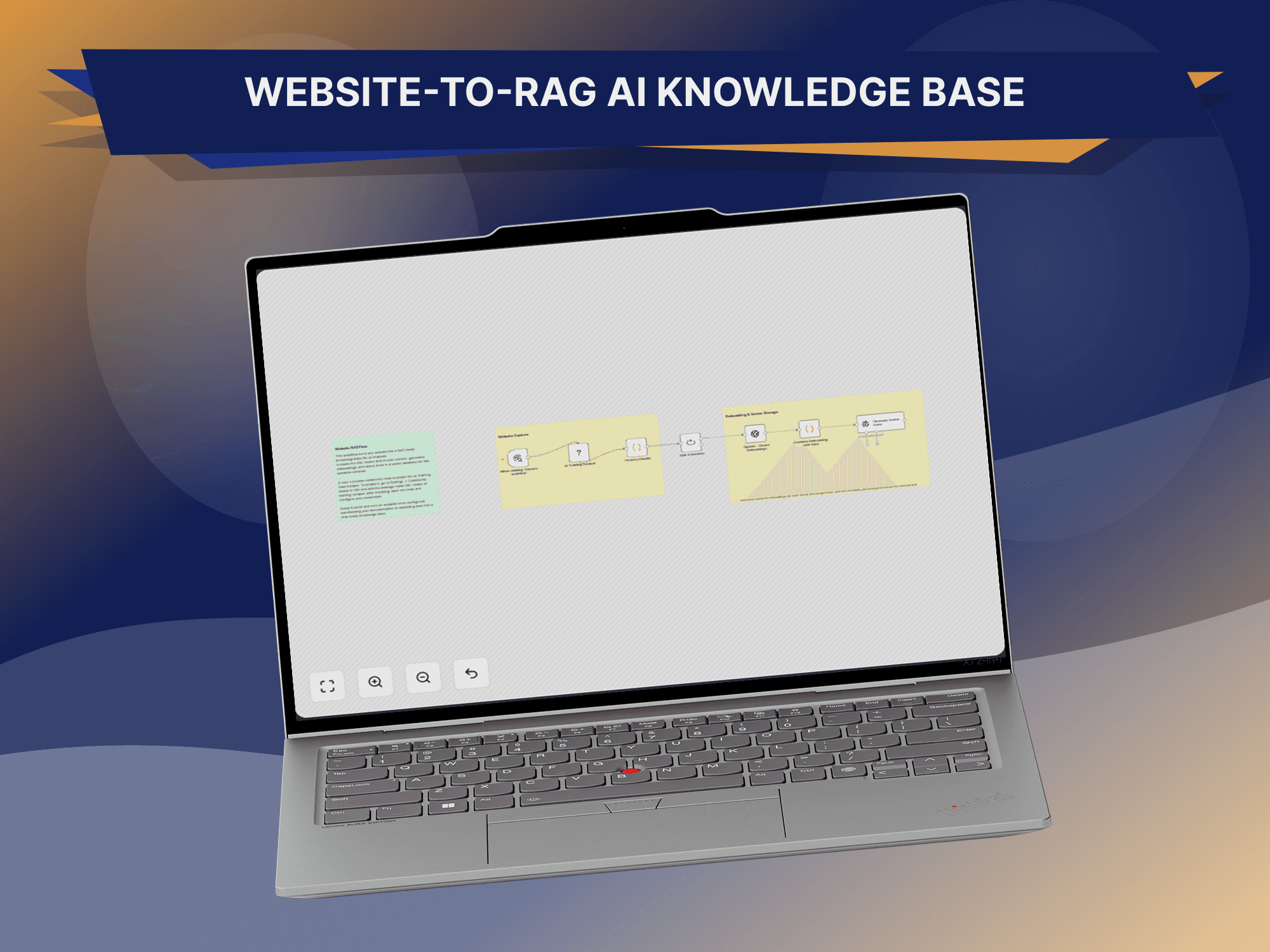
It starts with collecting business knowledge from trusted sources — website pages, product documentation, help-centre articles, FAQs, internal guides, policies and approved PDFs. Raw pages rarely arrive retrieval-ready: navigation menus, footers, cookie notices and repeated headings get cleaned out, and what's left is split into smaller, meaningful chunks — a product overview, pricing, installation steps, troubleshooting, refund policy — each one focused enough to retrieve precisely.
Each chunk is then converted into an embedding, a numerical representation of what the text means rather than the exact words it uses. That's what lets the system match a question like "Can I get my money back if I cancel?" to a refund-policy document without either sentence sharing the words "money back" — semantic retrieval, not keyword search. The embeddings are stored in a vector database alongside metadata — title, source, category, product, version, date updated — which matters once a knowledge base grows beyond a handful of documents.
What happens when a customer asks a question
A message like "How long does delivery normally take?" enters the workflow, gets converted into a retrieval query, and the vector search returns the relevant delivery-time documentation. That retrieved context — not the model's general knowledge — is what the AI uses to answer: "Standard delivery normally takes 3–5 business days. Express orders typically arrive within 1–2 business days." The response is grounded in what the business actually documented, not in what a model assumes.
“"I couldn't find enough information in our current documentation to answer that accurately. I'll connect you with our support team." That response is far better than a confident, invented one.”
Knowing when to hand off to a human
Not every question should be answered automatically. A mature system runs on escalation rules: high-confidence, well-documented questions get an automated response; low-confidence answers, sensitive requests, complaints and refund requests go to a human. "AI replaces the support department" is the wrong framing — the better one is AI handling repetitive questions while people handle the exceptions: complaints, disputes, sensitive account issues, complex technical cases, angry customers and anything that genuinely needs judgment.
Where n8n fits
RAG is one part of the system, not the whole thing. A real support automation still needs a customer message to arrive from WhatsApp, a website widget or email, get identified against the CRM, searched against the knowledge base, passed to the model, checked against confidence and business rules, then either answered directly or escalated — with the outcome written back to the CRM either way. n8n is the layer that wires all of that together as one workflow instead of a set of disconnected scripts.
One knowledge layer, several channels
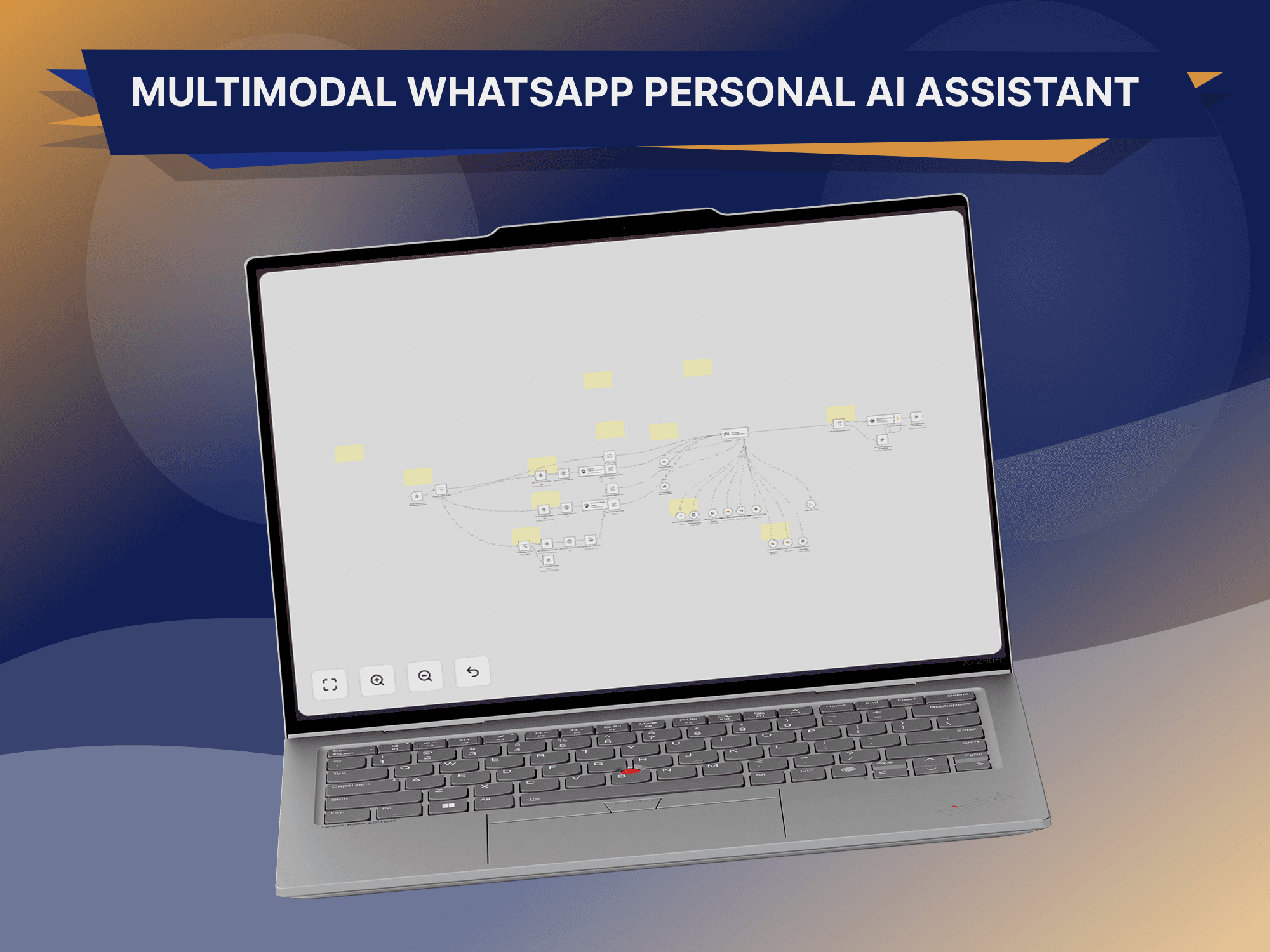
Because the knowledge layer is built separately from the channel, the same RAG search can sit behind WhatsApp, a website chat widget and email support without being rebuilt three times. On WhatsApp — a channel customers are often already using — the workflow can identify the customer, pull conversation context, search the knowledge base, generate and send a response, log the interaction and escalate when needed, with the conversation visible in the CRM instead of trapped in a phone. On email, the same retrieval can either send a fully automated reply for simple questions or prepare a draft for a rep to approve on anything more complex, with urgency classified and the CRM updated either way.
The knowledge base is the real project
The quality of a RAG system depends entirely on the quality of what it retrieves — outdated or conflicting content means confidently wrong answers. That means treating the knowledge base as something with an owner, a review cadence tied to product and policy changes, version information on important documents, useful metadata, and a habit of testing common questions against the retrieval system directly. RAG is as much a knowledge-management project as it is an AI one.
What to measure
Message volume isn't the metric that matters. Resolution rate, escalation rate, first response time, customer satisfaction, answer accuracy against approved information, and support hours actually saved give a far more honest picture of whether the system is working.
Mistakes worth avoiding
The common failure modes are consistent: uploading everything instead of curating useful content, ignoring document quality and structure, shipping with no escalation path, running with no monitoring for failed workflows or degraded answers, giving the AI more system access than its task requires, and treating the model itself as the source of truth instead of the retrieval layer behind it.
Where this is heading
Support automation is moving past simple rule-based chatbots toward systems that retrieve customer context, search internal knowledge, create tickets, update CRM records, route complex cases and assist human reps directly rather than just answering FAQs. The goal was never AI that can do everything — it's AI that reliably does the right things, with people picking up everywhere judgment is genuinely required.
RAG customer support is a practical way to combine a model's language ability with information your business actually trusts — retrieving the right answer before generating a response, rather than hoping the model already knows it. Combined with n8n, CRM integration, business rules and human escalation, it stops being a chatbot and becomes real support infrastructure: faster answers, consistent information, less repetitive work, and a support team with more time for the conversations that need a person.
Common questions
Does RAG eliminate AI hallucinations?
No system can guarantee that — but a well-designed RAG architecture grounds responses in relevant business information and gives the model an escalation path for anything it doesn't have enough information to answer, which meaningfully reduces unsupported answers.
Can it work with WhatsApp and a CRM?
Yes — a WhatsApp conversation can trigger the same retrieval workflow, and customer context and conversation events can sync to the CRM through APIs or workflow integrations, so support history isn't stuck inside a messaging app.
Is n8n required to build this?
No. RAG can be implemented with different tooling, but n8n is useful for connecting the AI system to the business applications, APIs, databases and messaging platforms around it.